
Traditional Hindu Ceremonies
Uplift your life events.
Saṁskāras
Celebrating and sanctifying life’s major milestones as ordained in the Gṛhya Sūtras, Āgamas, and Purāṇas.


Domestic Ceremonies
Traditional rituals and ceremonies for homes, properties, and sacred spaces, performed to establish harmony, protection, and lasting auspiciousness.
Special Pūjās and Yajñas
Sacred fire rituals and devotional pūjās performed to remove obstacles, invoke divine protection, spiritual, physical, and material well-being.


Festival & Calendar Observances
Ritual guidance and ceremonial services aligned with the Hindu sacred calendar, honoring festivals, vratas, and observance days through proper pūjā, vrata, and devotional discipline.

Spiritual Guidance and Education
Scriptural teaching and personal guidance rooted in Vaiṣṇava tradition, supporting spiritual understanding, disciplined practice, and meaningful application in daily life.

Counseling and Advisory Services
Ritual guidance and ceremonial services aligned with the Hindu sacred calendar, honoring festivals, vratas, and observance days through proper pūjā, vrata, and devotional discipline.
Saṁskāra Ceremonies
1. Garbhādhāna (गर्भाधान)
Garbhādhāna is the saṁskāra performed to sanctify conception and invite a virtuous soul into the womb. It emphasizes purity, responsibility, and prayerful intention before procreation.2. Puṁsavana (पुंसवन)
Puṁsavana is performed during early pregnancy to promote the health, vitality, and well-being of the unborn child. Traditionally, it also reflects prayers for noble qualities and continuity of the family lineage.3. Sīmantonnayana (सीमन्तोन्नयन)
Sīmantonnayana involves the ceremonial parting of the pregnant mother’s hair to protect her and the fetus from negative influences. It is a rite of emotional support, invoking peace, strength, and prosperity for the mother.4. Jātakarma (जातकर्म)
Jātakarma is performed immediately after birth to welcome the newborn into the world. It includes prayers for longevity, intelligence, and spiritual awakening.5. Nāmakaraṇa (नामकरण)
Nāmakaraṇa is the formal naming ceremony of the child, usually conducted on an auspicious day. The name is chosen to reflect spiritual ideals, family heritage, and astrological harmony.6. Niṣkramaṇa (निष्क्रमण)
Niṣkramaṇa marks the child’s first outing, traditionally to a temple or into sunlight. It symbolizes the child’s gradual introduction to the external world under divine protection.7. Annaprāśana (अन्नप्राशन)
Annaprāśana is the ceremony in which the child is fed solid food for the first time. It signifies physical growth, nourishment, and the blessing of abundance.8. Cūḍākaraṇa (चूडाकरण)
Cūḍākaraṇa, or tonsure, involves shaving the child’s head, often leaving a śikhā. It represents purification, removal of past karmic influences, and promotion of healthy growth.9. Karṇavedha (कर्णवेध)
Karṇavedha is the ritual piercing of the ear lobes, performed for both cultural and symbolic reasons. It is believed to protect the child’s health and enhance receptivity to sacred sound.10. Vidyārambha / Akṣarārambha (विद्यारम्भ / अक्षरारम्भ)
This saṁskāra marks the child’s formal initiation into learning, beginning with writing sacred syllables. It invokes Sarasvatī, the goddess of knowledge, for intellect and wisdom.11. Upanayana (उपनयन)
Upanayana is the sacred thread ceremony that initiates the student into disciplined study and spiritual responsibility. It marks a “second birth,” introducing the child to the Gāyatrī mantra and Vedic life.12. Vedārambha (वेदारम्भ)
Vedārambha is the formal commencement of Vedic study under the guidance of a guru. It emphasizes reverence for scripture, pronunciation, and disciplined learning.13. Keśānta (केशान्त)
Keśānta is the first ceremonial shaving of the beard, performed during student life. It signifies maturity, self-control, and readiness for higher responsibilities.14. Samāvartana (समावर्तन)
Samāvartana marks the completion of formal education and student life. The graduate prepares to re-enter society with knowledge, ethics, and duty.15. Vivāha (विवाह)
Vivāha is the sacred rite of marriage, uniting two individuals in dharma, artha, and kāma. It establishes the foundation for family life and continuation of society.
-Śāstra-based Match-Making Consultation
Guidance for marital compatibility based on Vedic principles, horoscopes, and Vaiṣṇava values.
-Vivāha Saṁskāra (Wedding Ceremony)
Complete Vedic marriage ceremony conducted according to Vaiṣṇava traditions and sacred rites.
-Engagement Rituals
Traditional pre-wedding ceremonies marking the formal commitment between the families.
-Pre-Marriage Pūjās
Sacred rituals performed before marriage to remove obstacles and invoke divine blessings.
-Post-Marriage Homas
Fire rituals conducted after the wedding to bless the couple with harmony, prosperity, and devotion.16. Antyeṣṭi (अन्त्येष्टि)
Antyeṣṭi is the final rite performed after death, involving cremation and ancestral offerings. It helps the soul transition peacefully and supports its journey onward.
Expert guidance on performing final funeral rites according to Vedic and Vaiṣṇava traditions.
-Vaikuṇṭha Samarādhana
Ceremonies dedicated to the soul’s journey to Vaikuṇṭha, invoking divine protection and peace.
-Śrāddha Ceremonies
Rituals performed to honor deceased ancestors, seeking their blessings and spiritual upliftment.
-Tarpanaṁ
Offering of water and prayers to departed souls for peace, purification, and liberation.
-Annual Death Anniversary Rites
Observances held each year to commemorate and honor the departed family members.
-Mokṣa-Oriented Prayers
Special prayers and rituals aimed at guiding the soul toward liberation and eternal peace.
Domestic Ceremonies
1. Gṛha Praveśa (House-Warming Ceremony)
A sacred ceremony performed upon entering a new home to invoke peace, prosperity, health, and divine protection. The ritual purifies the space and establishes spiritual harmony for the household.2. Vāstu Śānti Pūjā and Homa
A ritual performed to harmonize residential or commercial spaces in accordance with Vāstu Śāstra. It seeks the blessings of Bhagavān Viṣṇu to remove imbalances and ensure stability, well-being, and auspiciousness.3. Bhūmi Pūjā (Groundbreaking Ceremony)
Conducted before construction begins to honor Bhū Devī and the presiding deities of the land. This ceremony seeks blessings for structural stability, successful completion, and freedom from obstacles.4. Office or Shop Inauguration
A pūjā performed to sanctify new business premises and invoke prosperity and ethical success. It supports sustained growth, positive energy, and harmonious professional relationships.5. Altar Setup and Deity Installation (Prāṇa Pratiṣṭhā)
A sacred ritual to install deities in a home or temple altar and invoke divine presence. This ceremony transforms the mūrti into a living center of worship, enabling daily pūjā and devotional practices.
Special Pūjās andYajñas

1. Viśvaksena Pūjā (विष्वक्सेन पूजा)
Performed at the beginning of major rituals to remove obstacles and ensure their successful completion. Lord Viśvaksena is invoked as the remover of hindrances and guardian of sacred rites.2. Puṇyāhavācana (पुण्याहवाचन)
A sanctifying ritual involving sacred water infused with Vedic mantras. It purifies the space, participants, and ritual items, establishing auspiciousness.3. Viṣṇu Homa (विष्णु होम)
A sacred fire ritual invoking Lord Viṣṇu for overall well-being, harmony, and spiritual progress. It promotes balance in personal and family life4. Lakṣmī–Nārāyaṇa Homa (लक्ष्मी–नारायण होम)
Performed to invoke prosperity, marital harmony, and divine grace. This homa strengthens both material stability and devotional life5. Nṛsiṁha Homa (नृसिंह होम)
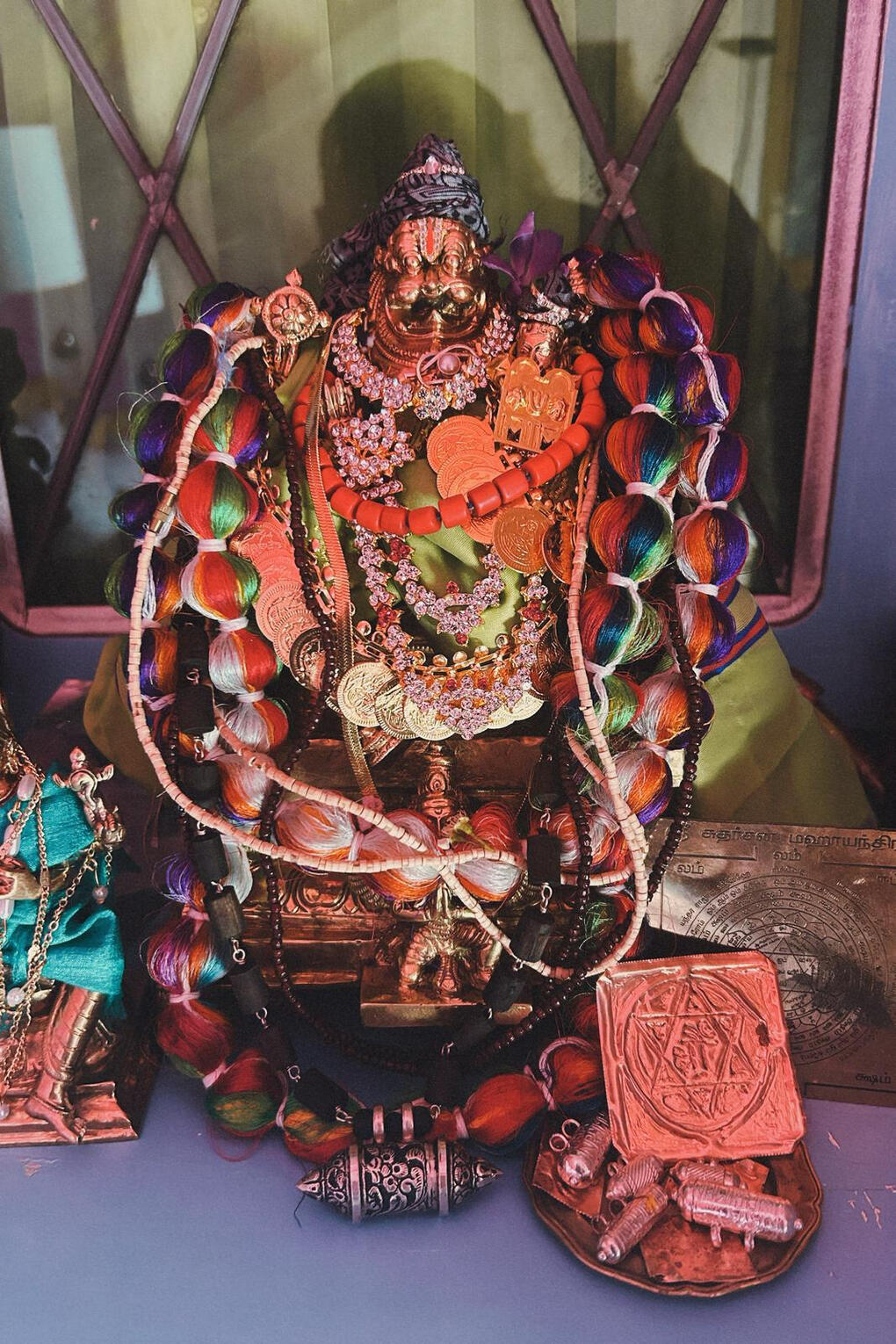
A powerful fire ritual invoking Lord Nṛsiṁha for protection, courage, and removal of fear. It is especially beneficial during times of distress or uncertainty5. Nṛsiṁha Catuṣṭhāna Pūjā – Maṇḍala–Vigraha Pūjā – Kumbha Homa
An elaborate series of worship and fire rituals invoking Lord Nṛsiṁha in multiple forms. It is performed for intense protection, inner strength, and spiritual fortification.6. Special Nṛsiṁha Kavaca Preparation
Sacred preparation and consecration of the Nṛsiṁha Kavaca for personal protection. The kavaca is empowered through mantra and ritual for daily devotional use.7. Sudarśana Pūjā–Homa (सुदर्शन पूजा–होम)
A combined pūjā and homa invoking Bhagavān Sudarśana for divine protection and success. It is performed to remove negative influences and restore balance.8. Dhanvantari Homa (धन्वन्तरि होम)
A healing homa invoking Lord Dhanvantari for health, recovery, and longevity. It is often performed during illness or for preventive well-being.9. Hayagrīva Homa (हयग्रीव होम)
Performed to invoke Lord Hayagrīva for knowledge, clarity, and success in education. It supports students, teachers, and seekers of wisdom.10. Satyanārāyaṇa Pūjā (सत्यनारायण पूजा)
A devotional worship of Lord Satyanārāyaṇa performed for prosperity and fulfillment of vows. It promotes peace, harmony, and gratitude within the family.11. Aṣṭa-Lakṣmī Pūjā–Homa (अष्टलक्ष्मी पूजा–होम)
A ritual invoking the eight forms of Goddess Lakṣmī. It seeks prosperity in wealth, courage, knowledge, food, success, and spiritual abundance.12. Garuḍa Homa (गरुड होम)
Performed for relief from afflictions, protection, and spiritual strength. It is especially beneficial for overcoming fear, negativity, and unseen obstacles.13. Aiśvarya, Health, Protection, and Peace Homas
Customized homas tailored to individual or family needs. These rituals focus on wealth, physical well-being, safety, and mental peace.14. Ekādaśī Special Rituals (एकादशी विशेष अनुष्ठान)
Pūjās and observances performed on Ekādaśī days dedicated to Lord Viṣṇu. They support purification, devotion, and spiritual upliftment.
Festival & Calendar Observances

1. Ekādaśī Observance Guidance (एकादशी व्रत मार्गदर्शन)
Guidance for proper fasting, worship, and devotional practices observed on Ekādaśī days. Emphasis is placed on purity, Viṣṇu-bhakti, and scriptural observance.2. Vaikuṇṭha Ekādaśī Rituals (वैकुण्ठ एकादशी)
Special ceremonies performed on Vaikuṇṭha Ekādaśī to seek liberation and the blessings of Lord Viṣṇu. These observances mark the opening of the Vaikuṇṭha-dvāra and heightened spiritual merit.3.Rāma Navamī (राम नवमी)
Festival rituals celebrating the divine appearance of Lord Rāma. The observance emphasizes dharma, devotion, and righteous living.4. Kṛṣṇa Janmāṣṭamī (कृष्ण जन्माष्टमी)
Sacred observances marking the appearance of Lord Kṛṣṇa through fasting, midnight pūjā, and devotional singing. It deepens remembrance of Kṛṣṇa’s līlās and teachings.5. Nṛsiṁha Jayantī (नृसिंह जयन्ती)
Rituals commemorating the appearance of Lord Nṛsiṁha. These ceremonies invoke protection, fearlessness, and unwavering devotion.6. Dīpāvalī (दीपावली)
Celebration of Dīpāvalī honoring Lord Rāma’s return to Ayodhyā. The festival signifies the triumph of dharma and divine light over darkness.7. Brahmotsava Support (ब्रह्मोत्सव)
Ritual and ceremonial assistance for temple Brahmotsava festivals and major celebrations. Support includes pūjās, homas, and processional observances conducted according to tradition.8. Cāturmāsya Observances (चातुर्मास्य)
Guidance and rituals observed during the sacred four-month period dedicated to restraint, vrata, and spiritual discipline. These observances enhance devotion, humility, and self-purification.9. Various Vratas and Saṅkalpa Rituals (विविध व्रत एवं संकल्प)
Guidance and ritual support for undertaking spiritual vows and observances. Includes saṅkalpa, pūjā, and proper completion of vratas.10. Monthly Amāvāsyā / Pūrṇimā Rituals (अमावस्या / पूर्णिमा)
Regular observances conducted on new-moon and full-moon days. These rituals support purification, ancestral remembrance, and devotional focus.
Spiritual Guidance and Education
1. Bhagavad-gītā Teaching
Instruction in the timeless wisdom of the Bhagavad-gītā, emphasizing practical application in daily life. Teachings focus on dharma, devotion, and inner clarity.2. Śrīmad Bhāgavatam Discourse
Explanations of the sacred narratives and teachings of the Bhāgavatam. These discourses deepen understanding of bhakti, devotion, and the nature of Bhagavān.3. Vaiṣṇava Philosophy - Vedānta
Guidance in Vaiṣṇava theology and Vedāntic principles as presented in the śāstras. Emphasis is placed on ethical living, devotion, and philosophical clarity.4. Daily Sādhanā Guidance
Personalized support for establishing and maintaining daily devotional practices. Guidance includes japa, pūjā, study, and lifestyle discipline aligned with the tradition.